Philosophy with open doors and windows.

I teach ethics, bioethics, and world religions in New York. I write about religious pluralism, William James and John Dewey, the lived body, and what laughter might have to do with the sacred.

Five questions I keep returning to.

Three decades of writing, read as a shelf. Each cover holds a question; each question leads to the essays and chapters where I have tried to answer it.

200020052010201520202025PluralismLaughterAmericanphilosophyEmbodimentFinitudeEckhart, Luther, and the Buddha in the Marketplace: Heidegger’s Great Synthesis of the Mystical and the Existential (2001)“I Call You Jesus, You Call Me Sonny”: Watching Pi and The Apostle with Søren Kierkegaard and Rabbi Nahman of Bratslav (2004)From Heidegger to Whitehead: Theology, Ontology, and the Critics of Totalization (2005)The Philosopher and the Neuroscientist: Dewey, Harris and the Nature of Religious Experiences (2008)Between Ecstasy and Eschatology: Immanence, Transcendence, and the Metaphysics of Process (2009)Why I am Not a Pantheist (Nor a Panentheist): Metaphysics, Totalization, and the Cosmos (2009)Transcendental Love in a Thick Universe: Spiritual Meaning, Social Purpose, and the Ontology of Process (2010)Emerson and Eiseley: Two Religious Visions (2012)Incarnating the Resolution to the Unhappy Consciousness: Hegel, Dewey, and the Relevance of Film for Healing the Spiritual Self (2017)Is There a Future for the Philosophy of Religion? (2021)Comparative Philosophy of Religion (2023)Review of Philosophy of Humour: New Perspectives, edited by Viktoras Bachmetjevas and Daniel O’Shiel (2025)Review of Radically Personal: God and Ourselves in the New Axial Age, by Jerry L. Martin (2026)The Holy Versus the Sacred: Offering a Little Trouble for a Multiple Religious Belonging (2017)The Significance of Fragility: An Alternative Approach to Religious Pluralism and Interreligious Dialogue (2022)With Open Doors and Windows: Doing Theology in the Spirit of William James (2020)A ‘No’ at the Core of Life: Doing Transreligious Theology with William James (2016)To Laugh in a Pluralistic Universe: William James and the Philosophy of Humor (2020)Laughter as Natural Piety: John Dewey, Humor, and the Religious (2023)Classical American Philosophers (2026)Spirituality as Consummatory Experience: The Promises and Limitations of John Dewey’s Phenomenology of the Religious (2019)William James’s Argument for a Finite Theism (2013)Between Mysticism and Medical Materialism: Relevance of William James and John Dewey for the Question of Neurotheology (2011)Achieving Purpose in an Open Cosmos: The Continuing Relevance of William James for Relational and Interpersonal Theory (2015)Lady in the Radiator: Phenomenology, Embodiment, and the World of Eraserhead (2002)Race Cars, Hallways, and Monsters: Computer Games and the Phenomenology of Perception (2000)“Give Me Peace, Give Me Peace, Give Me Peace”: Using Film as a Tool for the Study of Comparative Religious Experience (2005)You Have to Take it With You: The Embodied Nature of the Religious Self (2008)Totality and Finitude: The Search for a Middle Ground (2003)Selving in a Dangerous World: William James, Buddhism, and Ecstatic Naturalism (2021)The Individual, the Social, and the Not Yet Being: Ecstatic Naturalism and a Metaphysics of Responsibility (2023)Five Days (2026)JW
Every writing, placed on the question it answers. Rings mark the years, from 2000 at the center to 2026 at the edge; hollow rings are writings outside the five questions.
PluralismJW 1
Can many faiths be true to a single life?Jonathan Weidenbaum

Can many faiths be true to a single life?

I have resisted the easy answer that all traditions secretly say the same thing. What interests me is harder and more honest: a dialogue that begins from fragility, a holy that troubles the sacred, and a theology that keeps its doors and windows open.

American philosophyJW 3
Where does the sacred live?Jonathan Weidenbaum

Where does the sacred live?

If James and Dewey are right, it lives inside ordinary experience: in the consummatory moment, in an open and unfinished cosmos, perhaps in a God who is finite. American philosophy gave me a way to speak of spirit without leaving the world.

EmbodimentJW 4
What do bodies, films, and games teach us about seeing?Jonathan Weidenbaum

What do bodies, films, and games teach us about seeing?

Phenomenology taught me to begin with the lived body. I have followed that thread into Eraserhead and The Apostle, into computer games, and into the neuroscience of religious experience.

FinitudeJW 5
How do we live as finite, fragile selves?Jonathan Weidenbaum

How do we live as finite, fragile selves?

My dissertation searched for a middle ground between totality and finitude. The question never left: how a self is made in a dangerous world, and what we owe one another in it.

Five days

For years I taught bioethics from the front of a classroom.

Then came five days in an intensive care unit, and I lived through what I had been teaching.

I have tried to think honestly about that experience: first for the Ethics Committee at Memorial Sloan Kettering in 2024, and now in a chapter for The Bloomsbury Handbook of Phenomenological Bioethics.

The chapter’s record

Where the work has gone.

North America31 entriesLatin America4 entriesEurope5 entriesAfrica1 entrySouth Asia6 entriesEast Asia2 entries1995200020052010201520202025
Each ridge is a region; it rises in the years my lectures, study, teaching, and travel took me there. Drawn from the 49 located entries in the chronology.

The classroom is where the questions are tested.

I have taught at Berkeley College in Manhattan since 2005 and at St. John’s University since 2021. For the honors program I created a course on bioethics, medical humanities, and social justice. Another, Belief and Grief, sits close to everything I write.

  • Ethics
  • World Cultures
  • World Religions
  • Introduction to Philosophy
  • The Mind and Body
  • Bioethics
  • Bioethics, Medical Humanities, and Social Justice
  • Belief and Grief
  • The Moral Life
  • The Ethics of Health Care
  • Critical Thinking
  • Life, Death, and Immortality
  • Mysticism and the Spiritual Quest
2021
Service Excellence Award, Berkeley College
2018
Excellence in Teaching Award, Berkeley College
2007
Teacher of the Year, Berkeley College

The questions travel.

I have carried this work to Puebla, Kraków, Bangalore, Madrid, Pretoria, and Niterói. On sabbaticals I have lived in China, Punjab, and Sri Lanka, and taught English to schoolchildren in the Himalayan villages of Uttarakhand.

PueblaNew YorkMadridBangalorePretoriaUttarakhandKrakówNiterói
48 lectures and panels since 1999; with study and sabbaticals, the record reaches 12 countries. Lines join each recorded place to the next.
Open the chronology
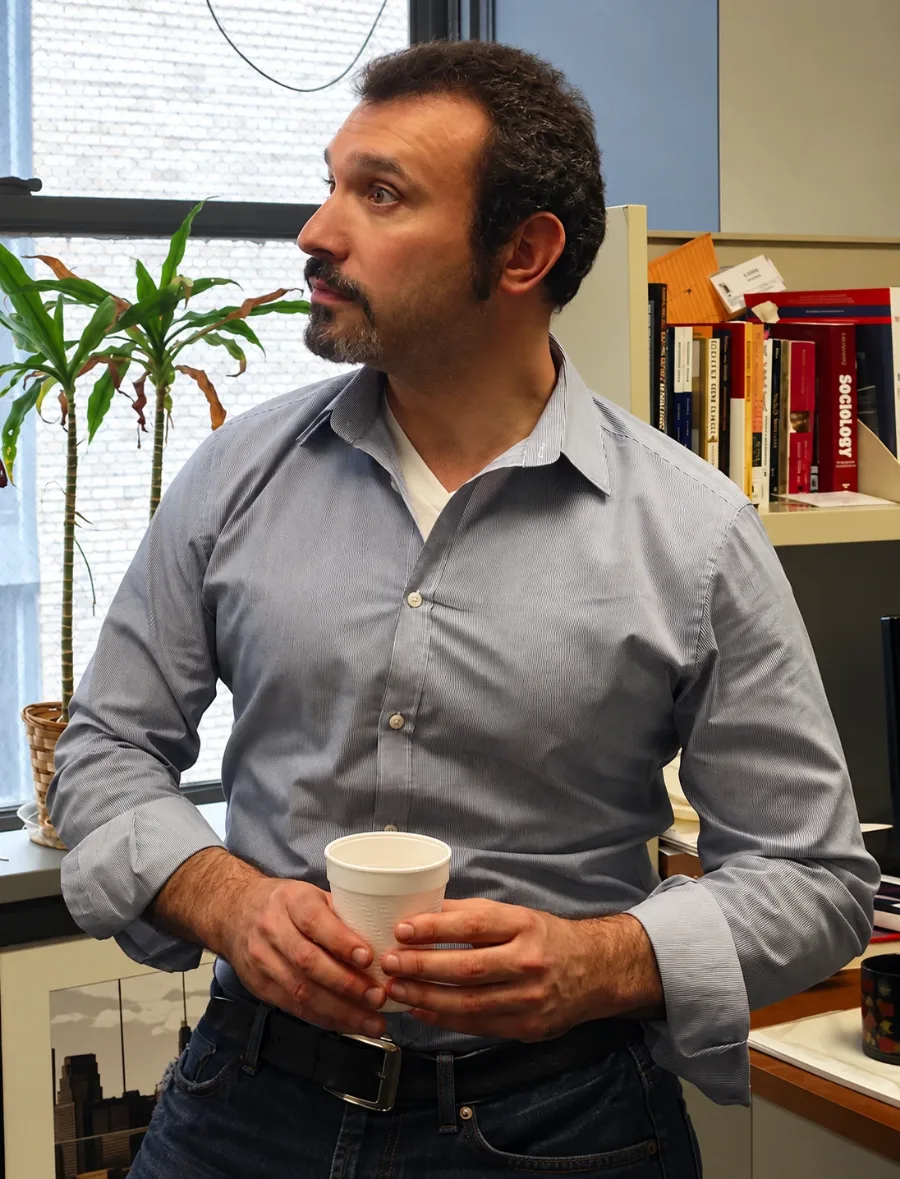
Jonathan Weidenbaum standing in an office beside a window and a bookshelf, holding a coffee cup
Jonathan Weidenbaum

About me

Ph.D. in Philosophy, University at Buffalo, 2003. B.A. in Philosophy and Religious Studies, University at Albany, 1996, with a year at the National University of Singapore.

Teaching
Berkeley College, since 2005. St. John’s University, since 2021.
Fields
Philosophy of Religion, Philosophical Ethics, Biomedical Ethics, American Philosophy, Philosophy of Humor.
Recognition
Teacher of the Year (2007), Excellence in Teaching (2018), Service Excellence (2021).